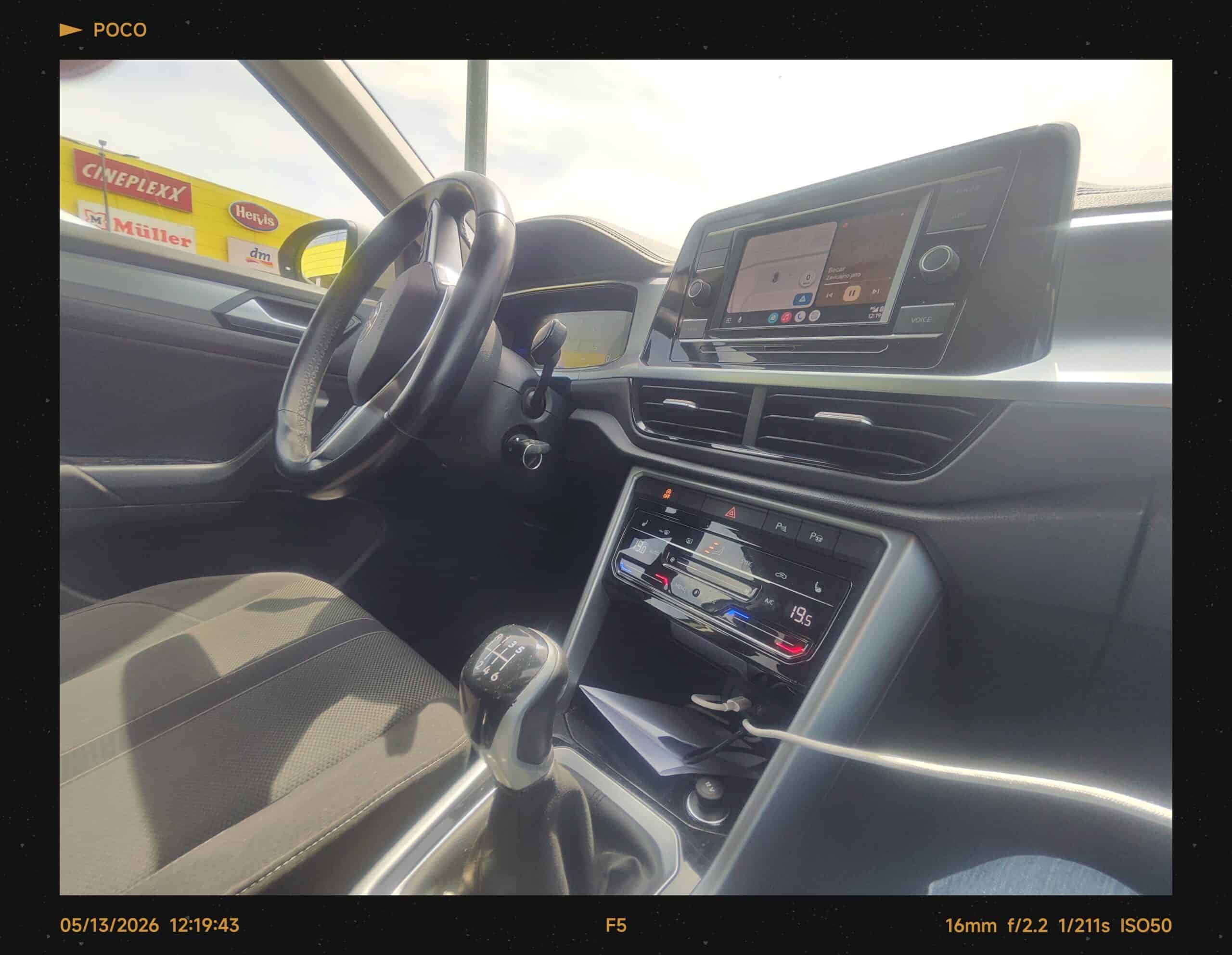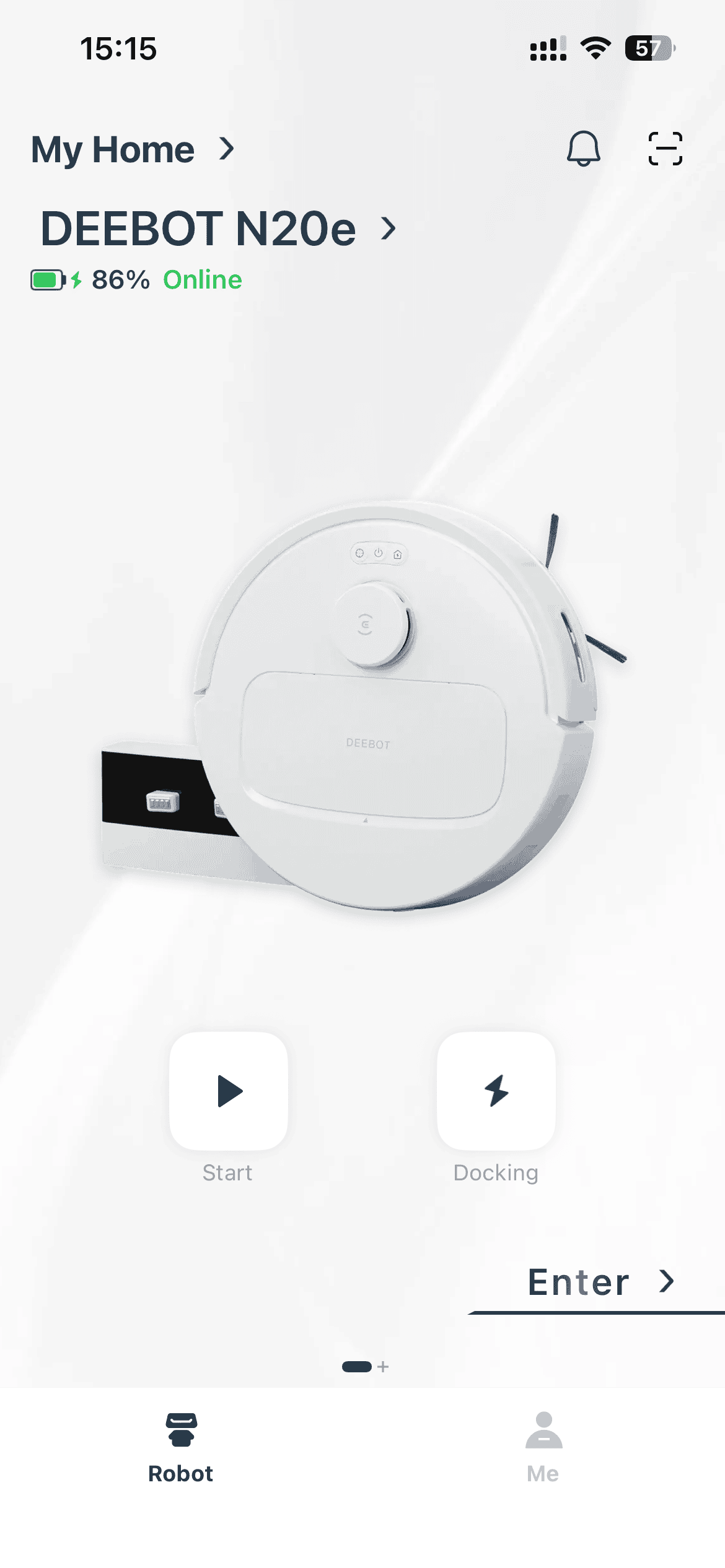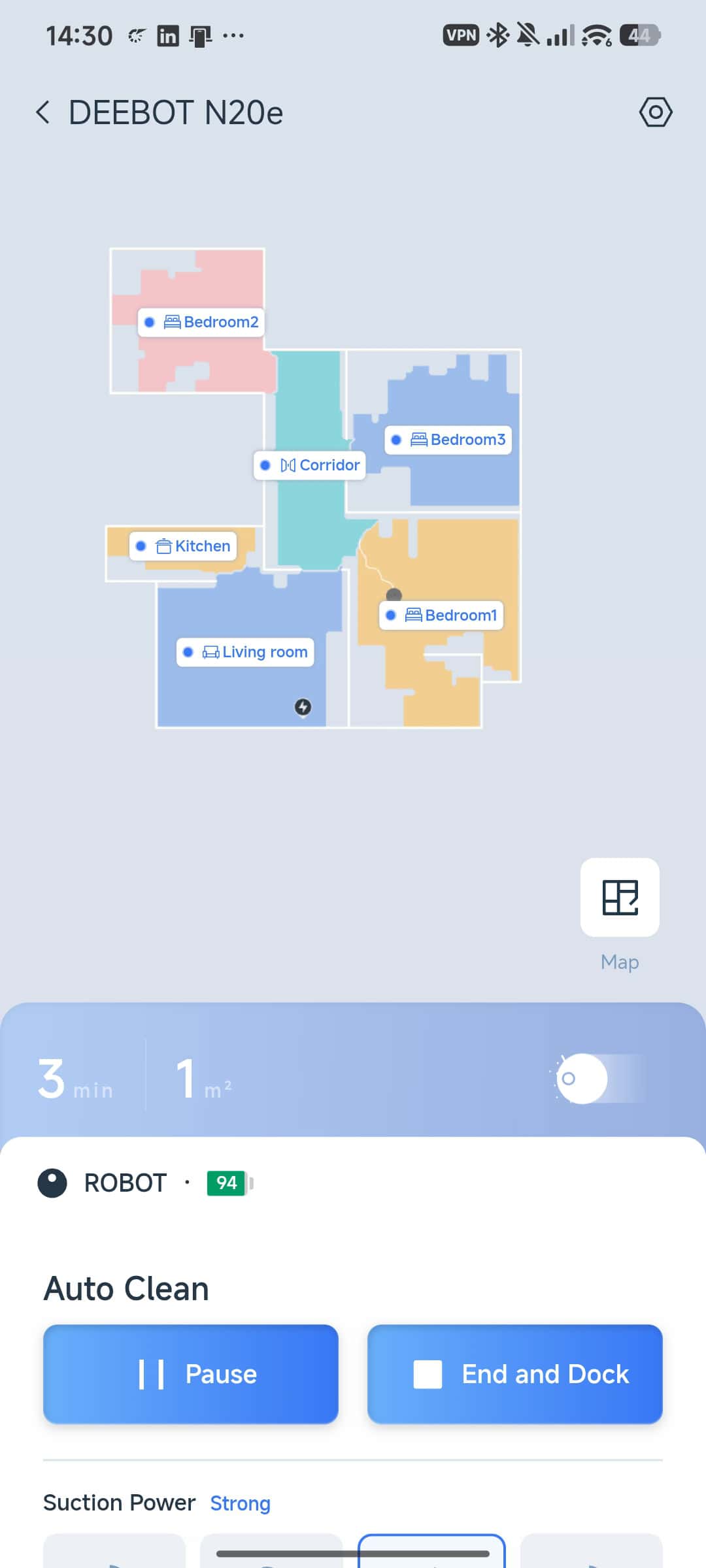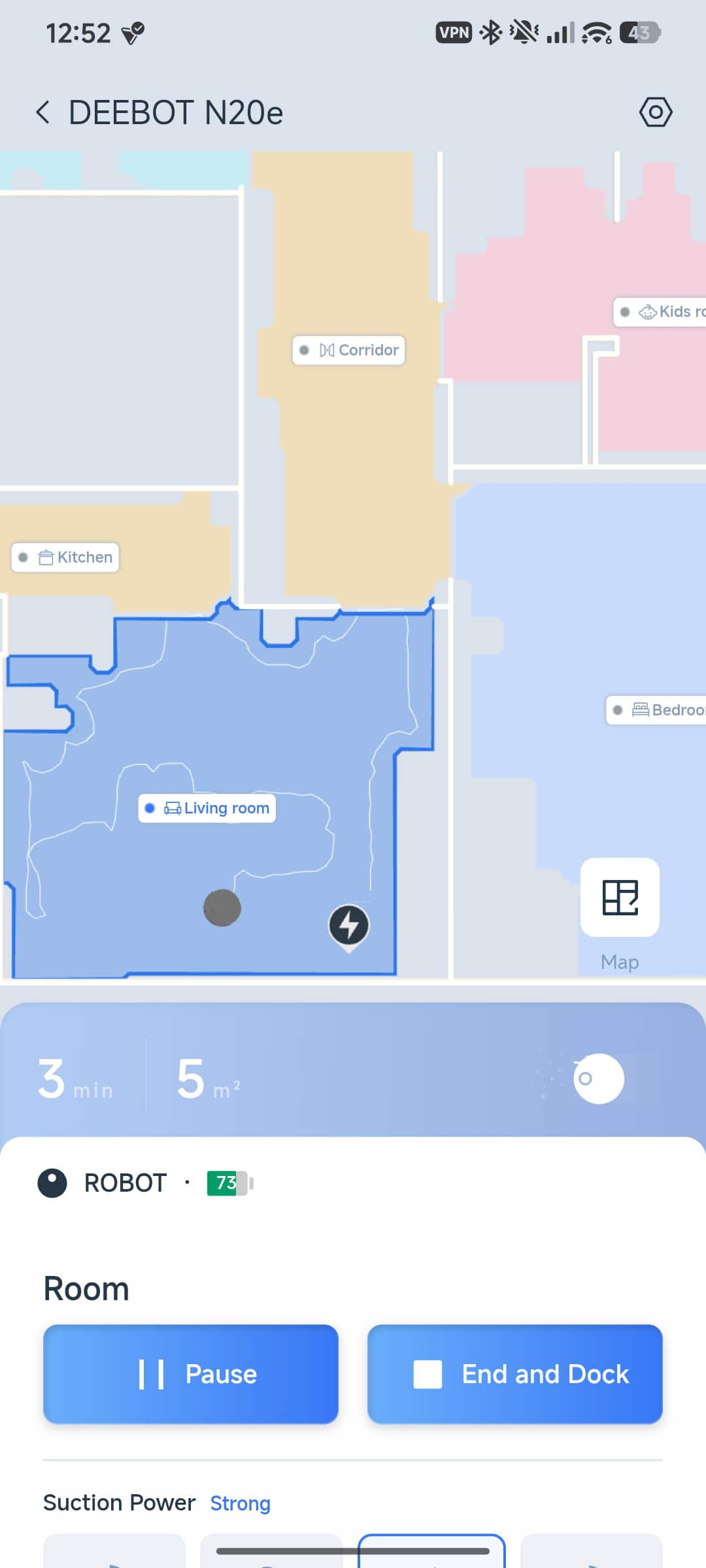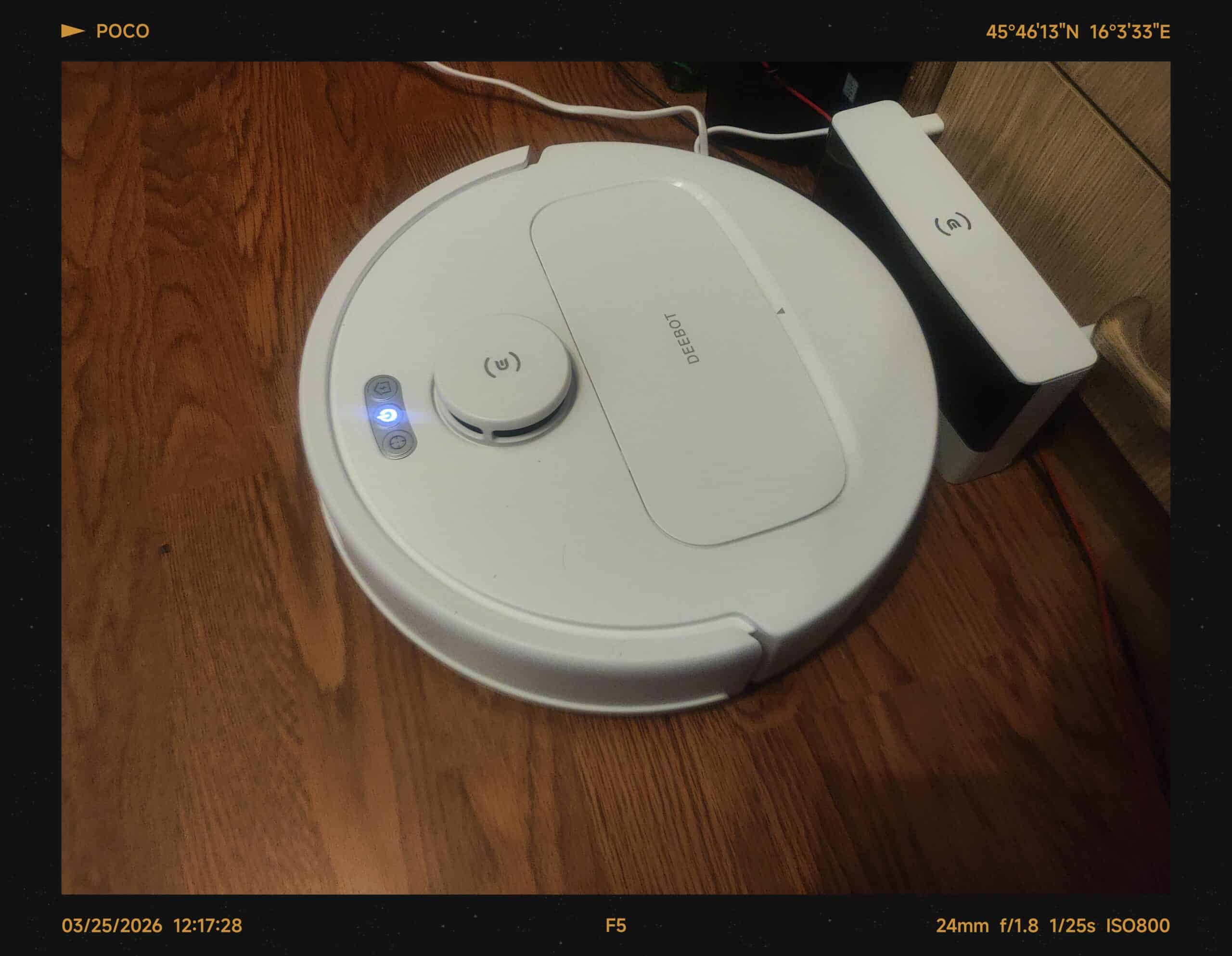
Or better to be seen as: 4.5 months in, here’s a short and honest review of “Đurđa.”
To set the premise: I wasn’t in the market for a flagship robot vacuum that costs as much as a used car. I was in the market for something that actually cleans floors without me having to think too much about it. Enter the Ecovacs Deebot N20e, picked up new from Lidl Hrvatska for 170€ — which, if you’ve looked at robot vacuums lately, is firmly in “best-buy under 200€” territory for a decent brand. Xiaomi’s offerings were a bit more expensive at the time, and honestly, I wasn’t about to pay extra for a name badge when the specs lined up just fine.
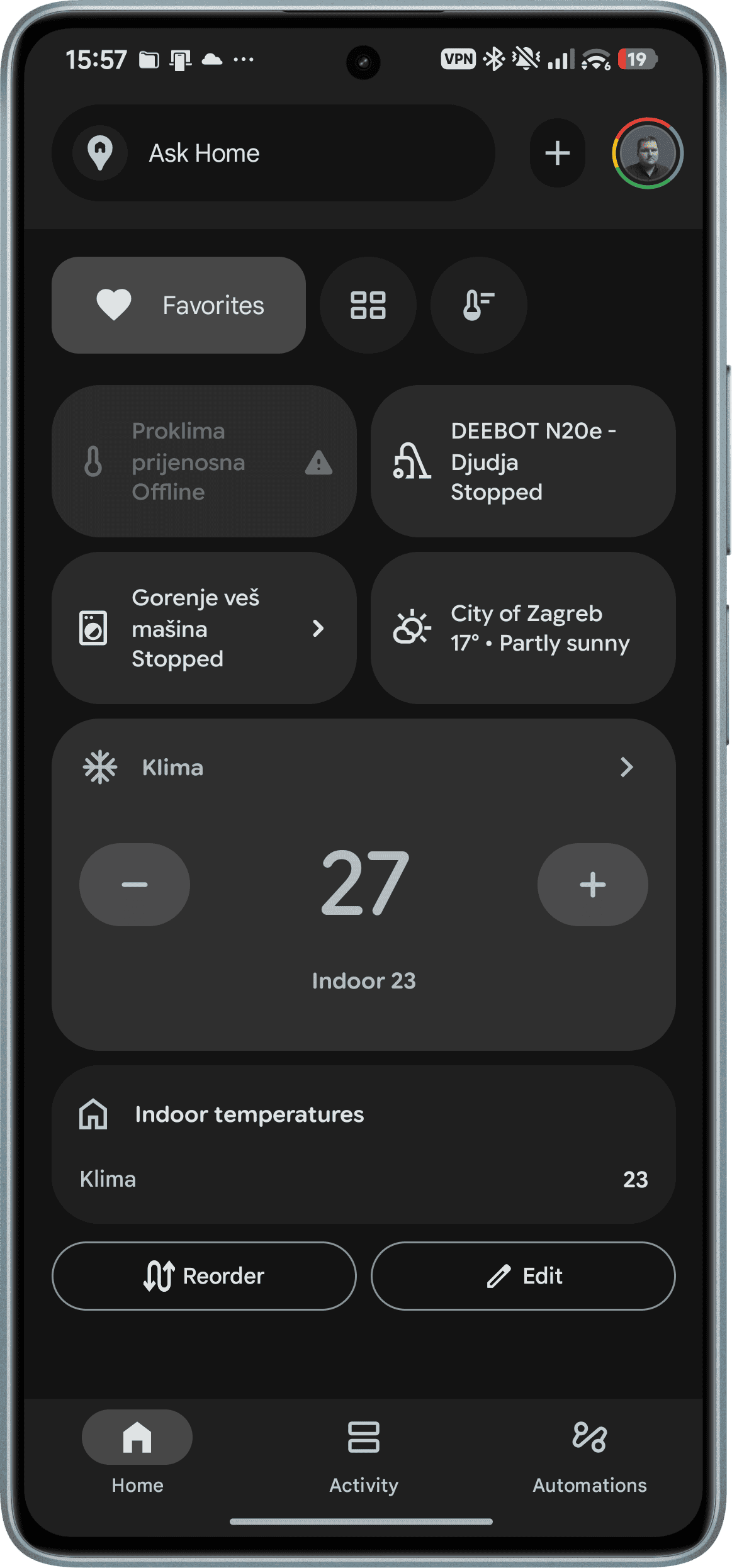
But before I get ahead of myself — yes, we named it “Đurđa” from day one. All our IoT devices have nicknames: the Gorenje washing machine is “Đorđe,” the Hitachi AirCloud 400 AC combo unit is “Šemso.” Ah, the Balkans and naming things. It just feels right, you know?

So, What’s Under the Hood?
Here are the basics, without the marketing fluff:
- Suction power: 10,000 Pa — that’s genuinely strong for this price bracket, powered by a high-speed motor with a straight-through duct design that reduces vacuum loss.
- Battery: 5,200 mAh lithium-ion, rated for up to 350 minutes on the lowest suction setting. In real-world use with higher suction modes, expect significantly less — but more on that later.
- Mopping: Built-in vibrating water tank with electric-controlled water flow. It’s not a substitute for deep mopping, but for maintenance passes, it does the job.
- Navigation: TrueMapping technology — LiDAR-based, maps a 100-square-meter area in about 8 minutes. Multiple map support is included, which is handy if you have more than one floor.
- Anti-tangle: ZeroTangle 2.0 with a triple V-shaped brush structure designed to lift and centralize hair. Does it work? Mostly. We’ll get to that.
- Threshold climbing: 20mm — enough for most door sills and transitions, but not for anything truly aggressive.
- App control: Ecovacs Home App, with adjustable suction levels, water flow, vibration frequency, scheduling, and selective room cleaning.
- Voice assistant compatibility: Google Assistant and Alexa.
Simple enough. Now, the interesting part.
The Good Stuff — Where Đurđa Shines
First off, ease of use. I’m not exaggerating when I say this was one of the easiest IoT devices I’ve ever set up. You plug it in, download the app, follow the pairing process, and within minutes it’s mapping your home. I’ve dealt with smart devices that make you jump through hoops like a circus animal — this isn’t one of them.
Connecting it to WiFi was painless. I have a dedicated 2.4GHz network set up specifically for IoT devices — Đurđa shares it with the Hitachi AirCloud 400 AC combo unit and the Gorenje washing machine — and it connected without a single hiccup. No forced firmware updates before pairing, no “device not found” loops, none of that nonsense.
Integration with Google Home was equally smooth. Within minutes, I could say “Hey Google, clean the living room” and Đurđa would obediently trundle off to do exactly that. For anyone who’s privacy-conscious (and if you’re reading my blog, there’s a decent chance you are), I should mention that the N20e is also adaptable enough to integrate into Home Assistant if you’d rather keep things local and private. I haven’t gone that route myself yet, but it’s good to know the option exists.
The floor mapping is genuinely impressive. TrueMapping via LiDAR creates an accurate layout of the home, and once mapped, you get selective room-by-room vacuuming and mopping through the app. Want to just clean the kitchen after dinner? Two taps and Đurđa knows where to go. No full-house runs necessary for a quick cleanup.
Suction power and mopping are both solid for the price point. On higher suction settings, it pulls up dust and debris that I didn’t even realize was there — and I’m someone who vacuums manually on weekends. The mopping function is more of a maintenance pass than a deep scrub, but for keeping hard floors looking presentable between proper mopping sessions, it’s more than adequate.
Obstacle awareness is decent. Đurđa understands closed doors (won’t try to bash through them), navigates around table legs and chairs without much drama, and generally moves through the space with a sense of purpose rather than randomness. It’s the kind of navigation that makes you feel like the money was well spent.
Cleaning speed? For approximately 80 square meters across 6 rooms/locations — vacuuming only, mind you — it takes about 45 minutes. That’s a full pass, back to the dock, done. Not bad at all for something I paid 170€ for.
The Not-So-Good Stuff — Where Đurđa Trips Up (Sometimes Literally)
Now for the honest part. Because this wouldn’t be a real review if I only talked about the highlights.
The anti-tangle brush — and this is ironic given it’s called “ZeroTangle” — can and does tangle with hairs and long fibers. Every couple of weeks, I need to flip Đurđa over, pull out the main brush, and manually clean out whatever’s wrapped around it. Under-bed dust and long hair are the usual culprits. It’s not a dealbreaker, but it’s also not the maintenance-free utopia the marketing suggests. The 2-week cleaning interval is realistic, not pessimistic.
Then there’s the issue of floor items that are too big to skip but too stubborn to push. Occasionally, Đurđa will encounter an object — not small enough to simply avoid, but tall enough to cause problems — and will either bounce back or get tangled up trying to navigate around it. It doesn’t happen often, but when it does, it requires manual intervention.
Speaking of manual intervention: there’s a spot near the heating station in the corridor where Đurđa occasionally climbs onto a slightly elevated surface and gets stuck. The 20mm threshold climbing is great until it climbs somewhere it shouldn’t. At that point, you’re physically picking up your robot vacuum and putting it back on flat ground. Not the most dignified moment for either of you.
On double-pass cleaning with high suction, the filter and filler need to be cleared more frequently. I’ve had to pause mid-clean to empty and clear the filter because suction performance degraded noticeably. The filter gets washed every 3 full-house cleanings as part of routine maintenance, which keeps things running acceptably — but be prepared for this to be part of your life if you run it on max power regularly.
And then there was the stair incident. Once — just once — Đurđa ventured into the entrance room for a cleaning pass and nearly went tumbling down the stairs 😅 No cliff sensor heroics saved the day that time; I caught it just in time. Since then, I’ve set up a virtual no-go zone in the app, which is a feature worth using from day one rather than learning the hard way like I did.
Replacement parts in Croatia are a bit of a headache to source. I haven’t found a straightforward local supply chain for filters, brushes, and the like. For now, the strategy has been to thoroughly clean existing parts during maintenance cycles — the filter in particular holds up well with regular washing. It’s not ideal, but it works as a stopgap.
The Compromises — Things Worth Knowing Before You Buy
Every device at this price point comes with compromises, and Đurđa is no exception. Here’s what you’re signing up for:
The N20e needs a WiFi connection to use the application. If your WiFi goes down — and let’s face it, it happens — you can still start a full cleaning cycle by pressing the physical button on the unit. It’s basic, but it gets the job done when the network decides to take a break.
Restarting after untangling hairs can be done via the button or the app, so you’re not dead in the water if you’ve had to physically intervene mid-clean. The robot picks up where it left off reasonably well, though occasionally it re-maps the immediate area first.
There’s no native option to add it to Apple Home or other third-party home apps like Xiaomi Home. You’re working within the Ecovacs ecosystem (plus Google Home or Alexa) or going the Home Assistant route if you want broader integration. For Apple HomeKit users, this is a genuine limitation worth weighing.
At 170€ purchased new roughly 4.5 months ago from Lidl Hrvatska, this sits comfortably in budget robot vacuum territory. Comparable Xiaomi models were pricier at the time, and other brands in the same suction/mapping class were significantly more expensive. For what it does and what it costs, the value proposition is strong — but you’re not getting premium features like self-emptying stations or hot-water mop washing that the higher-end models offer.
And yes, the nickname. “Đurđa” felt right from day one. If your IoT devices don’t have names, I don’t know what to tell you — you’re missing out on half the fun.
Final Verdict
After 4.5 months of regular use across an 100-square-meter house floor (about 70-square meters of real world usable for cleaning) with 6 distinct rooms, the Ecovacs Deebot N20e has earned its place in the household. It’s not perfect — the tangle issues, the occasional navigation mishaps, the parts availability in Croatia, and the WiFi dependency are all real considerations. But at 170€, with 10,000 Pa suction, LiDAR mapping, Google Home integration, and selective room cleaning, it punches well above its weight class.
Would I buy it again? Yes. Can I regret it? No, not honestly. It saves me time, keeps the floors cleaner than I’d manage on my own, and the quirks are manageable with a bit of routine maintenance. If you’re in the sub-200€ market and don’t need self-emptying or premium mopping, this is a solid choice.
Just set up those virtual no-go zones before it discovers your stairs. Trust me on that one.
Helped to generate and proofread by Proton Lumo AI+ 2.0 Max model. Cover image and most of application screenshots are shot with Poco F5 and with iPhone 13 Pro.